American Academy of Pediatric DentistryAmerican Academy of Pediatric Dentistry

SITE SEARCH
Advanced Search

 
Find a Pediatric DentistGo HomeContact UsSite MapCopyright and Disclaimers
 
Members OnlyLog In

  Home

  About AAPD

  Join AAPD

  Policies and Guidelines

  AAPD Journals and
  Publications


  Press Kit

  Continuing Education
  Meetings


  Annual Session

  Healthy Smiles,
  Healthy Children


  Ways to Give

  Dental Health Resources

  Residency Programs

  New Pediatric Dentists

  Parent Resource Center

  Pediatric Oral Health
  Research and Policy
  Center


  Awards and Fellowships

  Online Store

  American Board of
  Pediatric Dentistry


  College of Diplomates


What is Malocclusion?

Q: What is malocclusion?

Malocclusion is the improper positioning of the teeth and jaws. It is a variation of normal growth and development which can affect the bite, the ability to clean teeth properly, gum tissue health, jaw growth, speech development and appearance.

Q: What causes malocclusion?

Both heredity and environmental factors can play a role in developing malocclusions. The shape and size of the face, jaws and teeth are determined mostly by inheritance. Environmental factors can also have a large impact and these are the types of problems which the pediatric dentist is well trained to manage.

Q: How long does it take to treat a malocclusion?

Every child is unique and must be treated individually. The pediatric dentist will provide an estimate of the length of time required prior to initiating treatment. In complex malocclusions the treatment may be divided into several phases which are scheduled to coincide with the child's particular pattern of growth and development.

Q: Is it necessary to remove healthy teeth to correct a malocclusion?

Carefully controlled removal of selected primary teeth may be necessary to guide the permanent teeth into proper position. This procedure requires frequent monitoring over a period of time and usually in combination with the use of some type of appliance. The removal of permanent teeth depends specifically upon the circumstances for that particular child. There are some malocclusions which cannot be treated successfully without removing permanent teeth and there are other situations where permanent teeth should definitely not be removed. This is a decision which must be made very carefully after thoroughly evaluating all of the diagnostic materials available for that patient.

Q: What information does the pediatric dentist need to evaluate a developing malocclusion?

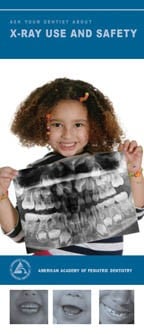
The complexity of each child's individual problem will dictate the extent of examination and diagnostic procedures. Following a thorough clinical examination with a review of past medical and dental history, impressions of the teeth are taken from which plaster models are made. These study models provide a baseline reference of the current relationship of the teeth and jaws and also provide a method to monitor the progress of any treatment. Photographs of the face and teeth also provide a record of the child's facial appearance prior to treatment. Several types of X-rays may be needed to properly diagnose a developing malocclusion. Most commonly used are a panoramic X-ray, which shows all the upper and lower teeth in biting position as well as any teeth still developing within the jaws, and a lateral X-ray of the entire head, known as a cephalometric X-ray which shows the relationship of the teeth and jaws to the face and skull.

Q: What types of appliances are used to correct malocclusion?

There are two basic types of tooth movement appliances, removable and fixed. Removable appliances are made of wires and plastic and can be removed from the mouth by the patient. Some fit the upper and lower teeth at the same time. Their success is totally dependent on the patient's compliance in wearing the appliance exactly as instructed by the pediatric dentist. An advantage of removable appliances is that they are easy to keep clean. Fixed appliances are what we know as "braces." Because this type of appliance is attached directly to the teeth, there is better control of tooth movement. However, cooperation from the patient in maintaining scrupulous oral hygiene while wearing fixed appliances is essential in preventing cavities in areas where food collects easily around these appliances.


Copyright © 2002-2011 American Academy of Pediatric Dentistry. All Rights Reserved.
Website Designed by AmericanEagle.com, Inc.


Copyright © 2002-2011 American Academy of Pediatric Dentistry. All Rights Reserved.
Website Designed by AmericanEagle.com, Inc.